
Are Wild Mushrooms Toxic to Dogs in Victoria BC?
By Anna Hakim & Perry Fanthorpe, Happy Homes Team at eXp Realty
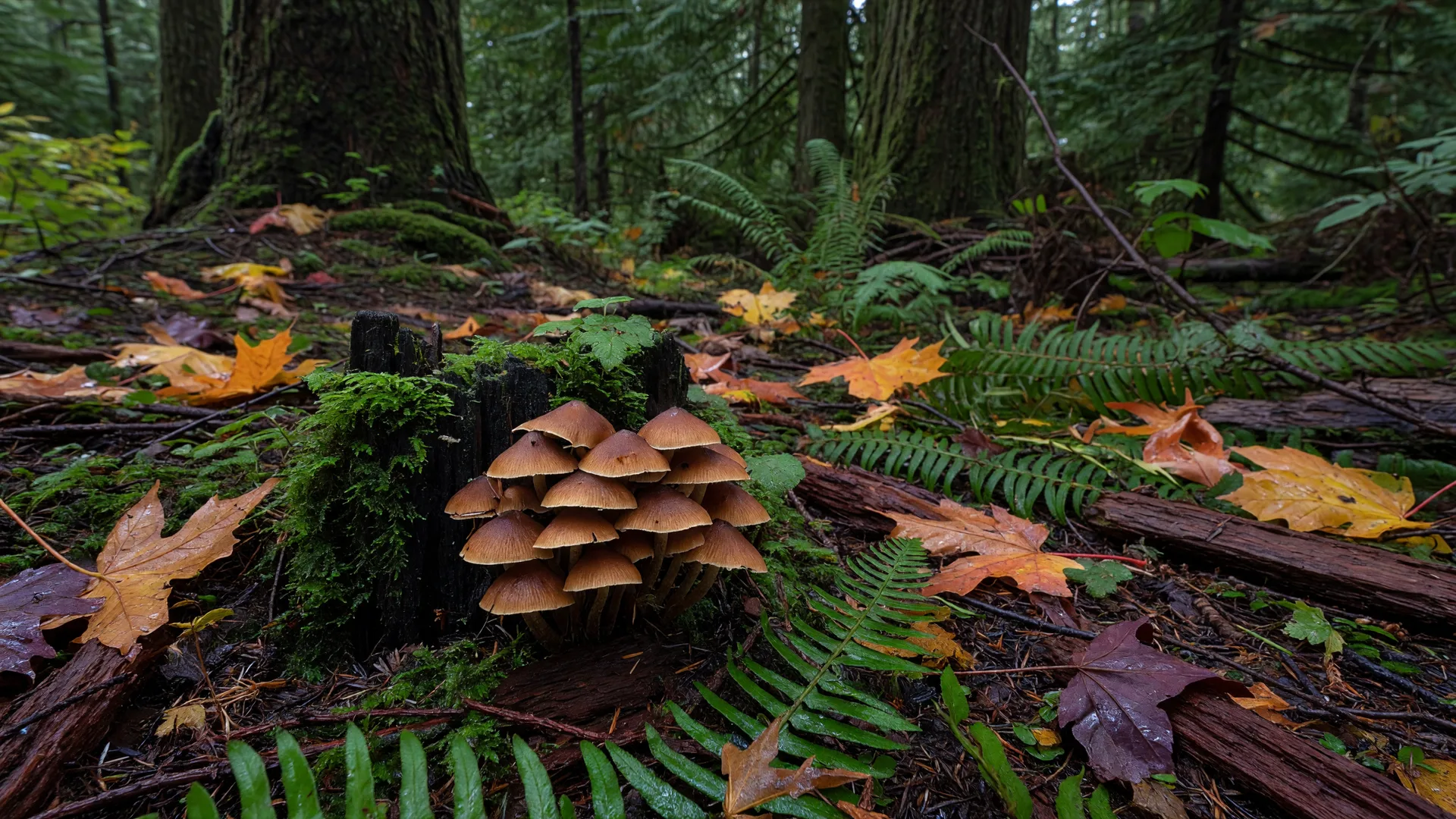
Yes, some wild mushrooms around Victoria are toxic to dogs, and a few are genuinely life-threatening. The death cap, which grows in BC and on Vancouver Island, is one of the world's most toxic mushrooms, and a Victoria puppy died from eating one in 2019. So if your dog eats any wild mushroom, treat it as an emergency and call your vet right away, even if the dog looks fine.
Our own rule with Ziggy and Sahara is: if a mouth goes near a mushroom, we treat it as a vet phone call, not a cooking question. Wet fall weather will start popping mushrooms all over, from the Gorge to Mount Douglas to the Saanich greenbelt, so this is the time of year to be sharp. You cannot reliably identify a safe mushroom by eye, and most dogs cannot tell one from the other by scent. So the safest play is watching the trail edge, plus a fast vet call if you ever have to make one.
If you know or suspect your dog has eaten a wild mushroom, do not wait for symptoms. Call your vet or a pet poison hotline right away, keep the whole mushroom if you can, and photograph where it was growing. We explain all the details below.
Which wild mushrooms around Victoria are the real dangers?
Death cap mushroom (Amanita phalloides): pale, olive to greenish cap, white gills, a cup at the base of the stem. It grows under mature trees, and in BC it has shown up in city parks, boulevards, and backyards, not just deep forest. It was linked to the warning issued after that Victoria puppy died in 2019.
Deadly galerina (Galerina marginata): small, amber to brown, and it grows right on rotting conifer wood in wet forests. It carries the same amatoxins as the death cap, and dog owners walk past it on practically every grassy stump on the Island.
Smith's amanita (Amanita smithiana): strongly toxic to the kidneys, and it shows up in Island conifer forests. Some dogs that survive the first day still develop kidney failure a few days out, which is why the vet visits.
Panther cap (Amanita pantherinoides) and fly agaric (Amanita muscaria): the classic big colourful caps with white spots. They act fast and can arrive at the nervous system; a documented poisoning near Victoria in 1976 was deadly for dogs within about an hour. We mention the old date to make the point that this hazard is not new, and it hasn't gone away.
There are also plenty of small brown species (deadly parasol, Pholiotina, Conocybe) that carry the same liver toxins as the death cap. The practical takeaway is that almost all the lethal ones are the little innocent-looking brown or pale ones, not the fairy-tale bright ones, so "weird but cute" is exactly the wrong standard to apply.
When is mushroom season in Greater Victoria?
Prime season runs roughly September through November, and it fires up after the first good rains that follow warm days. Around Victoria, the most reliable places to find a cluster are damp forest edges, creek sides, and under mature oaks, alders, and evergreens in parks, yards, and greenbelts. The next few weeks are exactly the window, which is why we are publishing this guide now.
Mushrooms pop up and disappear from one week to the next, and a patch your dog sniffs every day can be empty for a month, then suddenly covered. So the walk is not "we checked last week," it is wet and we watch the edge of the trail the whole way.
How fast do symptoms show up?
Neurotoxic mushrooms (panther cap, fly agaric) act quickly, often within 15 minutes to about 2 or 3 hours. Look for drooling, vomiting, tremors, wobbling, disorientation, agitation, and sometimes seizures. That fast onset is scary but at least it is unmissable.
The liver and kidney species (death cap, deadly galerina, Lepiota, Smith's amanita) run on a different clock. Symptoms can be delayed 6 to 12 hours or longer, with vomiting, watery diarrhea, and belly pain. The trick is the dog may seem to recover for about a day, then organ failure shows up two to three days later. The dog looks fine at dinner and sick two days after, which is why the "wait and see" approach is the one mistake that costs lives.
What should I do right now if my dog ate one?
First, call the vet. Keep it short: "dog ate a wild mushroom, we don't know which one." Let the vet decide whether to induce vomiting or start treatment; do not induce vomiting on your own without their say-so.
Second, grab the mushroom for identification. Pick the whole thing, root and all, wrap it in a dry paper towel or put it in a paper bag, and keep it cool, not frozen. If you can, simply photograph the mushroom and the spot it grew before removing it. Bring both the sample and the photos to the vet.
Third, write down what time the dog ate it, and roughly how many. For mushrooms in a yard, also raise it with the vet, because even a harmless-looking mushroom by the back door can be one of the amatoxin species on a wet week.
Should I worry about mushrooms in my own yard?
Yes, a little bit. Death caps and their relatives fruit where the habitat suits them, and a yard with big mature trees or a chip-mulch bed is a classic spot. Wood-chip gardens are especially notorious for hosting toxic species, so a quick sweep before letting the dog off on a rainy morning takes about thirty seconds.
When we look at houses with dog-owning buyers, we check the yard and the greenbelt behind it in the same pass: what trees overhang the fence, whether there is bark or chip mulch, and where the dog tends to explore. A fenced yard that is easy to scan is a real safety feature, and it is one of the details we are happy to walk you through on a showing. And our guide to toxic plants in Victoria gardens covers the other plants that like the same spots.
Next steps
Save the numbers now rather than mid-crisis: your regular vet, plus the two 24-hour emergency clinics we list in our emergency vet guide. And if you have not built that dog first aid kit yet, this week is a fine week to do it.
If you are moving to a new home with your dog, let the Happy Homes Team walk the property with you on your terms. We will look at the yard through a dog owner, not just a buyer's eyes.