
Can My Dog Eat Raw Salmon in Victoria?
By Anna Hakim & Perry Fanthorpe, Happy Homes Team at eXp Realty
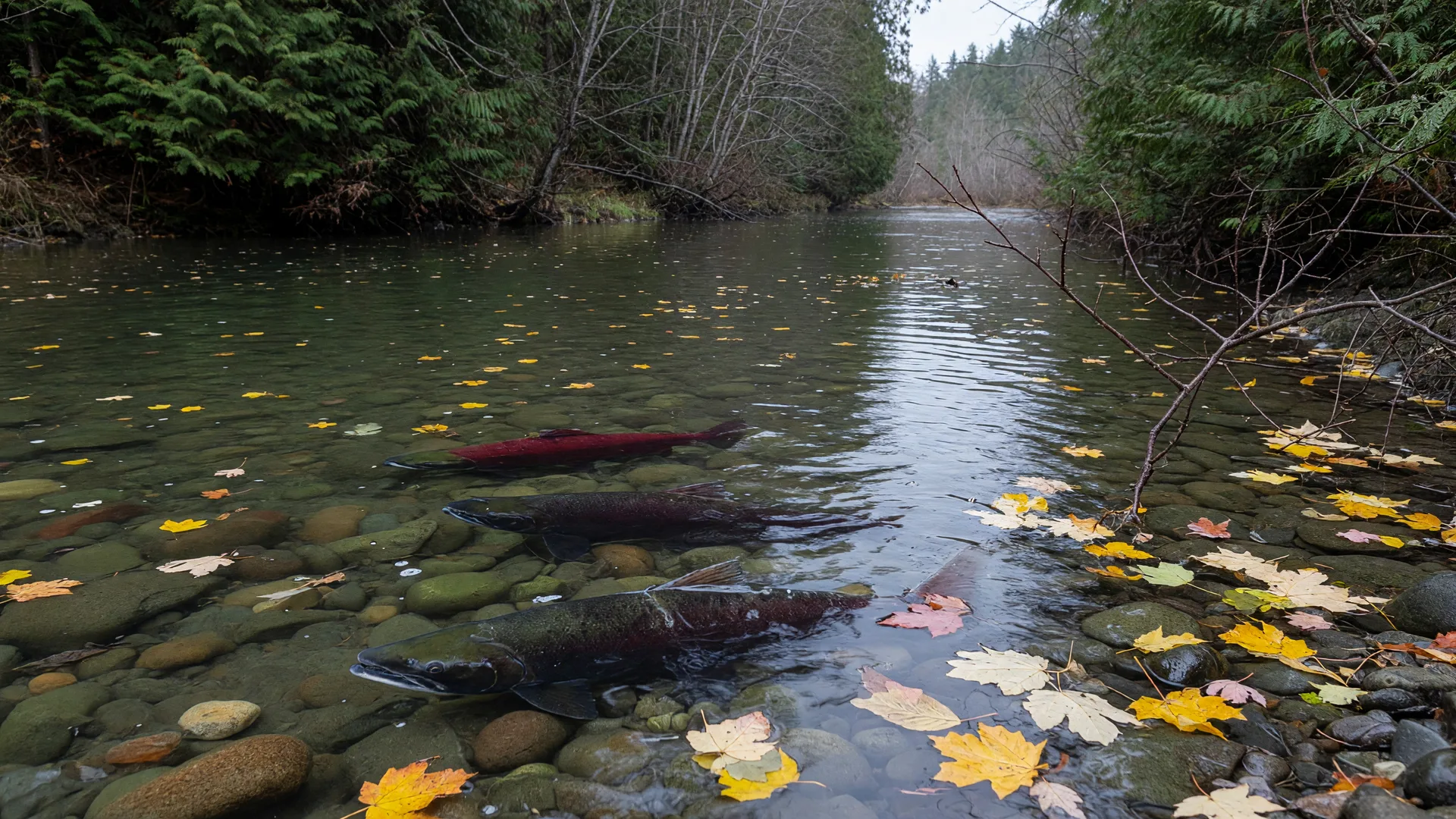
No, your dog should not eat raw salmon in Victoria, and most people here know it by the name salmon poisoning disease. Salmon from Pacific Northwest streams can carry a parasitic fluke packed with a bacterium that is often fatal to dogs if left untreated, and fall spawning runs are exactly when local dogs find fish on a riverbank. So if your dog grabs a raw fish from a creek or beach this fall, call a vet that day, not when symptoms show.
This is one of those Pacific Northwest warnings that makes sense the second you hear it: it is not a household dog illness, it is a wild-fish one. It is the reason we keep Ziggy away from spawned-out fish on fall walks, and the reason every new client from outside the region gets a thirty-second version of this from us before they move here.
Why is raw salmon dangerous for dogs in BC?
Salmon poisoning disease (SPD) is not a poison and it is not contagious. It starts with a tiny parasite called the Nanophyetus fluke, which buries itself in the intestines of raw or under-cooked salmon, trout, and steelhead from Pacific Northwest waters. That fluke carries a bacterium, Neorickettsia helminthoeca, and once the fluke is inside your dog, the bacterium moves through the body to the lymph nodes, spleen, and organs.
The fish you buy at a grocery store is not the concern. The concern is raw, fresh-caught fish from local salmon-bearing waters, the kind a curious dog finds after a spawning run. Fall is when the local runs arrive, which is exactly why it is the season we talk about it.
How quickly would my dog show signs of salmon poisoning?
Usually about five to seven days after the dog eats the infected fish. Some resources say as early as four or as late as ten days, which does not change the plan: if you know the dog ate raw fish, the vet visit happens on day one, not on the day the dog vomits.
We will say it plainly: that one-week gap is the trap. A dog that grabbed a fish on Saturday can look perfectly fine until Thursday, and by then the infection is deep. The vets we work with would much rather monitor a dog with a known exposure than treat one that is days into it.
What does salmon poisoning disease look like in a dog?
Fever, vomiting, and diarrhea, sometimes bloody. Along with those: loss of appetite, lethargy and weakness, swollen glands, and a discharge from the eyes or nose. Dogs often act like they have the flu and then slide downhill fast. Untreated, SPD is frequently fatal, commonly within about two weeks of the meal.
Treated early, the outlook is very different. The standard treatment is an antibiotic (usually doxycycline) plus a dewormer that kills the fluke (usually praziquantel), along with fluids and supportive care. Most dogs turn around quickly after treatment, which is the whole argument for making the phone call before things look bad.
Where do Victoria dogs actually run into raw salmon?
The famous local spot is Goldstream Provincial Park, where chum salmon return to the river in fall and the spawning season draws crowds of people and a few too many dogs. The rule we need to keep repeating: your dog stays out of the river entirely during spawning season there, and out of every other salmon creek on the Island for the same reason. Our Goldstream dog guide has the full rules, including the fines.
It is not only Goldstream, of course. Salmon-bearing rivers run all over southern Vancouver Island, from the Sooke River to the creeks feeding the Saanich Inlet, and spawned-out fish can wash up near beaches too. The dog-to-fish rule is the same everywhere: dogs stay out of the creek, and any fish a dog finds is picked up and kept away from mouths.
And there is a conservation angle that matters to us as locals: spawning salmon are stressed, and chasing them off their nests harms next year's run. So the on-leash and keep-out rules during spawning season protect the fish as much as your dog.
Does living near a salmon creek change how you buy a home with a dog?
A little, and it is worth knowing before you fall in love with a creek-side listing. A house within walking distance of Goldstream River, or of one of the smaller creeks around the Island, gives you a gorgeous year-round walking spot, but also a few weeks every fall where you manage your dog differently at the water. Yards that back onto a watercourse usually come with a fenced buffer or a setback, and we like showing those lots in October and November, when the creek is doing its loudest seasonal work, so you see the real place rather than the tidy summer version.
If that sounds like the right kind of neighbourhood to you, our complete guide to dog-friendly living breaks down the creeks, parks, and bylaw rules you need to know.
Next steps
Save the 24-hour emergency vet numbers before the scary walk, and keep the Goldstream salmon-season rules handy on your phone. And if you are house-hunting with a dog, the Happy Homes Team has walked every creek and corner of these neighbourhoods. Let's find the home where the water access is a blessing, not a worry.