How Cold Is Too Cold to Walk My Dog in Greater Victoria’s Winter?
By Anna Hakim & Perry Fanthorpe, Happy Homes Team, eXp Realty | AI Certified Agents
How cold is too cold to walk a dog in Greater Victoria?
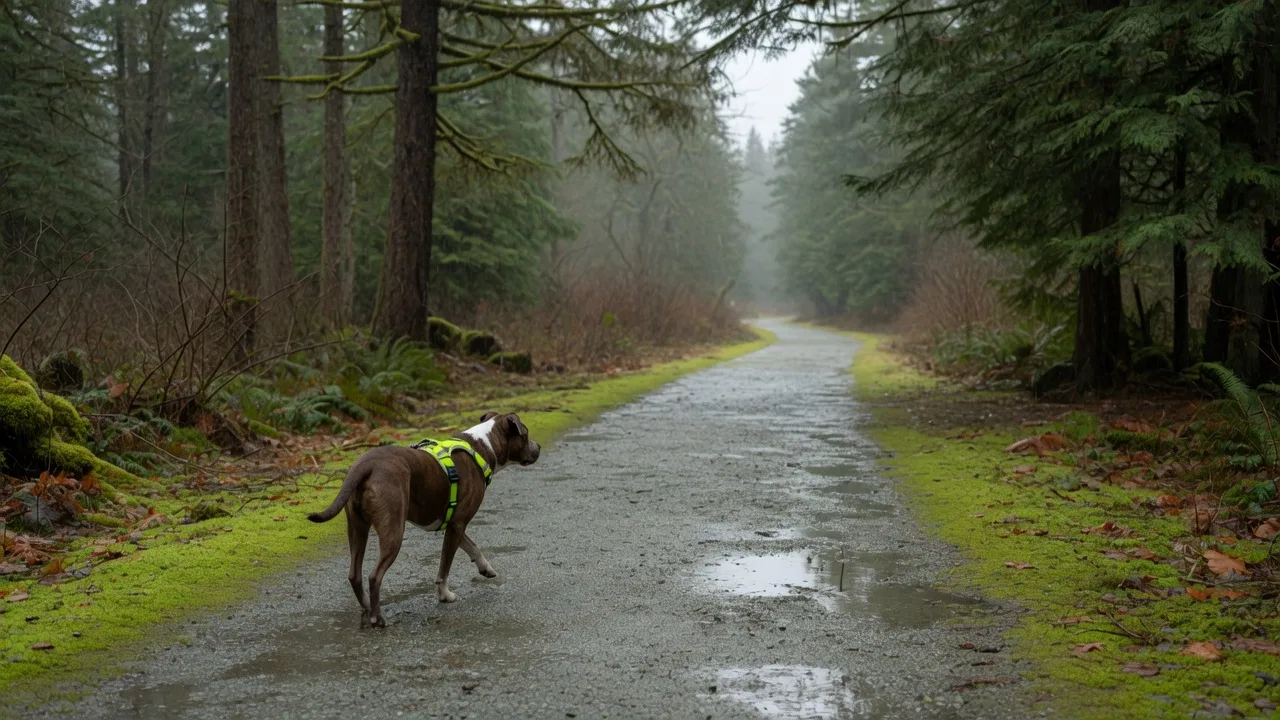
For most healthy adult dogs, you can keep walking outside all winter in Greater Victoria. Average January daytime highs sit around 7°C, which veterinary guidance puts well inside the safe band. The number that actually changes your routine is about 1°C: below that, small, short-haired, senior,and puppy dogs start to struggle,and once the mercury drops to about -4°C, most dogs need a much shorter walk. Below -9°C, or around -6°C with a wet coat or wind chill on top, stay home. That rarely happens here, but when it does, knowing the number keeps your dog safe.
I have watched the thermometer do more work than the calendar in the winters we have walked Ziggy and Sahara across Greater Victoria. Our cold snaps come with clear skies and frost,and the worst dog days are actually the ones that look mild: a drizzle-soaked 1°C morning with wind off the water. This guide is the temperature logic we actually use.
What do the temperature bands really mean for my dog?
Veterinary guidance groups outdoor temps into three practical bands. Between about 7°C and 1°C, most healthy adult dogs are fine for a normal walk, though tiny or thinly coated dogs may appreciate a coat. From about 1°C down to about -4°C, the walk gets shorter and the coat more important, especially for short-haired breeds. From about-4°C down to about-9°C, walking is risky for small dogs and genuinely dangerous if your dog is wet,and even sturdy double-coated dogs should be limited to quick outings
Medium double-coated dogs, like the Rottweiler blood in our Ziggy, handle cold far better than a lean short-haired dog ever will. But coat alone does not protect paws or ears,and a dog that is old, young, or stiff from arthritis loses body heat faster than a young adult does. The thermometer matters, but your individual dog matters more
Why does Victoria’s wet cold feel colder than the thermometer says?
The worst walking weather in Victoria is rarely the coldest. A dry, bright 3°C afternoon on the Galloping Goose is genuinely pleasant for a sturdy dog. A wet 1°C morning with drizzle landing on your dog’s back for forty minutes is a different sport. Water pulls heat out of a wet coat far faster than air of the same temperature, which is why the band between 1°C and -4°C is where most of our local dogs actually get cold
The wind off the water does the same thing, stacking wind chill on top of wet. If your dog comes home from a winter walk shivering even when the thermometer says 3°C,the drizzle and wind are doing the damage, not the number. That is when we switch to shorter loops, warmer coats,and the waterproof kind
Which dogs get cold first?
Small and toy breeds lose body heat fast because they have more surface area relative to their body weight. Lean short-haired dogs, from whippets to boxers, have almost no undercoat to hold warmth. Puppies under about a year old have less body fat and weaker temperature regulation,and seniors lose heat faster too, especially with arthritis or other age-related issues
Our Sahara, the 13-year-old Lab mix, has slowed a lot,and she wears a coat on any morning below about 4°C now, whether the schedule says so or not. Ziggy, at six and built like a small tank, will happily plow through puddles at 0°C for an hour. Same household, two very different cold tolerances: know yours before you leave the door
If you have a short-haired or lean dog, a well-fitted dog coat is not a fashion choice, it is gear. A moisture-wicking base layer under an insulated and waterproof shell handles our drizzle far better than a single fleece,and every local pet supply store worth the name carries them all winter
What are the signs my dog is too cold?
Dogs do not tell you they are cold with words, they tell you with their body. Shivering, lifting paws, slowing down, tucking the tail, stopping to sit, or plain refusal to move forward all mean head home. Cold ears and paw pads are another clue,and a dog that was fine twenty minutes ago can tip into trouble quickly once it gets wet
Get your dog inside, towel-dry thoroughly,and let them warm up gradually. Skip the space heater aimed straight at them,and get a dry towel, a warm room,and a slow warm-up going instead. A warm drink of water and a dry towel do more than a heater does
How do we keep winter walks safe and fun in Greater Victoria?
Short loops beat heroic epics from November through February. We keep a handful of routes under twenty minutes near home and rotate them, so a cold snap does not mean cabin fever,and does not mean a half-frozen dog either. Beacon Hill’s south end off-leash zone is our go-to for a quick blast of freedom,and the Galloping Goose handles the sideways rain days because its tree cover breaks the wind
Gear matters more than distance. Reflective gear and solid visibility are non-negotiable because our evenings arrive early,and our drizzle eats light. We wrote a full breakdown of local rain-season gear in our rainy season guide,and the winter after-dark parks guide covers where the lights actually are
How should I handle frost mornings and the odd snow day?
On frost mornings the grass crunches,and puddles ice over,but the temperature usually sits only a degree or two below freezing. Shorten the walk, keep your dog moving,and watch the paws: frost can crack paw pads without any visible clue until later. Road salt,and deicer on sidewalks can irritate paws,so rinse paws with warm water when you get home,and consider booties once crystals start forming
Snow is a once-or-twice-a-winter event inthe lower city,and dogs here lose their minds over it in the best way. Keep snow sessions short, watch snow balling up between the toes,and treat the first few icy steps like the skating rink they can be. A muddy, happy, slightly cold dog is a fine trade for a January highlight
What does winter walkability mean for where you live?
Winter is when the walk quality of a neighbourhood actually shows up. A house twenty minutes from a decent trail means January walks happen;a house where you have to drive to every walk means they quietly stop happening,and the yard becomes the only outdoor time your dog gets. When we look at homes with dog-owning clients,we weigh fenced yard size, entryway drying space,and proximity to the Goose, Beacon Hill,or the nearest off-leash park much harder in the winter months
If you are thinking about a home change with your dog’s winter comfort in mind, our neighbourhood guides cover which areas put trails and yards closest together. Or book a call with the Happy Homes Team,and we will dig into fenced yards,and walking routes,before you ever put in an offer
Your winter cold-weather cheat sheet
- Above 7°C: normal walks for most dogs; coats optional.
- 7°C down to 1°C: fine for healthy adults; coats,and shorter walks,for small, short-haired, senior,or puppy dogs.
- 1°C down to -4°C: shorten walks, add a coat, keep moving,and head home if your dog starts shivering.
- Below -4°C: risky for small dogs, dangerous if wet; keep it to supervised quick outings.
- Below -9°C (or -6°C windy or wet): stay home; use a fenced yard or a quick leash trip to the nearest patch of grass.
See you out there, rain coat on, dog coat on, thermos in hand. And on the single-digit mornings,the fenced yard,and the quick loop,will do just fine
Winter proves which house actually works for a dog: fenced yard, dry entryway,and a decent walk out the door. Our neighbourhood guides rank areas by walkability,and yards,and we have walked more January mornings than we can count. If a move is on your mind for your dog’s sake,book a call with the Happy Homes Team,and let us match the house to the walk

By Anna Hakim & Perry Fanthorpe
Happy Homes Team at eXp Realty, Victoria BC
Last updated: September4, 2026
Anna,and Perry,are Greater Victoria Realtors,AI Certified Agents,and proud dog parents to Ziggy,the Rottweiler,and Sahara, the Lab mix. They have walked every one of these winter routes,in drizzle,frost,and the occasional snow,and they care as much about the walk out your front door,as the house behind it